
Burnout vs. Depression: What your body is telling you and How to Tell the Difference
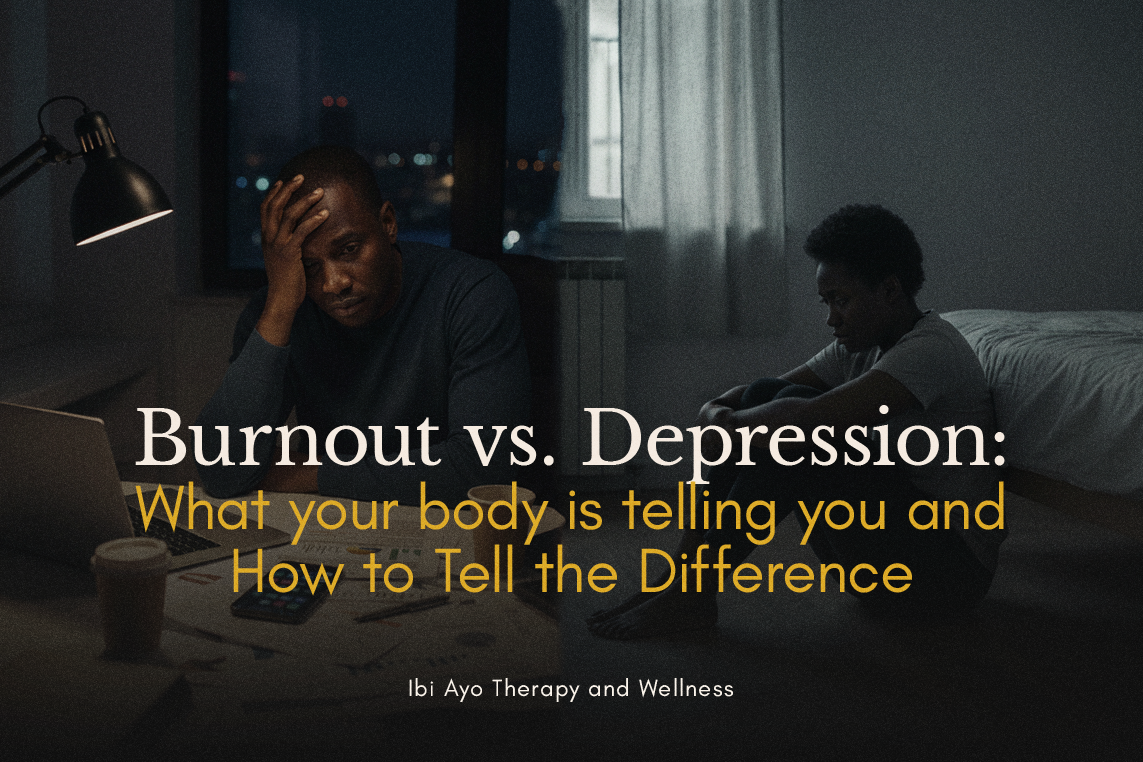
Burnout and depression are two distinct conditions that can manifest with similar symptoms, making it challenging to distinguish between them. However, understanding the differences is crucial for effective management and treatment. This article aims to explore the differences between burnout and depression, what your body is telling you, and how to tell the difference.
What is Burnout?
Burnout is a state of emotional, mental, and physical exhaustion caused by prolonged stress, overwork, or pressure. It is often characterized by:
Feeling drained, tired, or exhausted
Reduced productivity and performance
Cynicism or detachment from work or activities
Irritability, frustration, or mood swings
Physical symptoms like headaches, muscle pain, or sleep issues
What is Depression?
Depression is a mood disorder that affects how you feel, think, and interact with the world. It is characterized by:
Persistent sadness, emptiness, or hopelessness
Loss of interest in activities you once enjoyed
Changes in appetite, sleep, or energy levels
Difficulty concentrating, making decisions, or remembering things
Feelings of worthlessness, guilt, or self-blame
What Your Body is Telling You
So, what are the differences? Here's what your body might be saying:
Burnout:
"I'm overwhelmed and need a break."
"I need to set boundaries and prioritize self-care."
"I'm feeling stuck and need a change."
Depression:
"I'm struggling to find meaning and purpose."
"I'm feeling trapped and don't know how to escape."
"I need support and connection with others."
How to Tell the Difference
So, how do you know which one you're dealing with? Here are some key differences:
Causes: Burnout is often triggered by external factors like work stress, while depression can be triggered by a mix of internal and external factors.
Focus: Burnout is often about the external situation, while depression is about internal feelings and thoughts.
Symptoms: Burnout tends to be more about exhaustion, while depression is about emotional pain and hopelessness.
Response to rest: Burnout often improves with rest and self-care, while depression may require professional support and treatment.
What to Do
So, what can you do?
If you're feeling burned out:
Take a break and prioritize self-care.
Set boundaries and learn to say no.
Seek support from friends, family, or a therapist.
If you're struggling with depression:
Reach out to a mental health professional for support.
Practice self-compassion and prioritize your well-being.
Connect with others and build a support network.
Burnout and Depression have distinct causes, focuses, symptoms, and responses to rest.
Burnout is often triggered by external stress, focuses on the external situation, and improves with rest and self-care. Depression is often triggered by internal and external factors, focuses on internal feelings, and may require professional support. Key differences include exhaustion vs emotional pain, and response to rest and self-care.
In conclusion, burnout and depression are two distinct conditions that require different approaches to management and treatment. By understanding the differences and listening to what your body is telling you, you can take the first step towards seeking help and finding a path towards recovery.