
When Love Becomes a Crutch: Co‑Dependency vs Healthy Support in Still Shining Kdrama
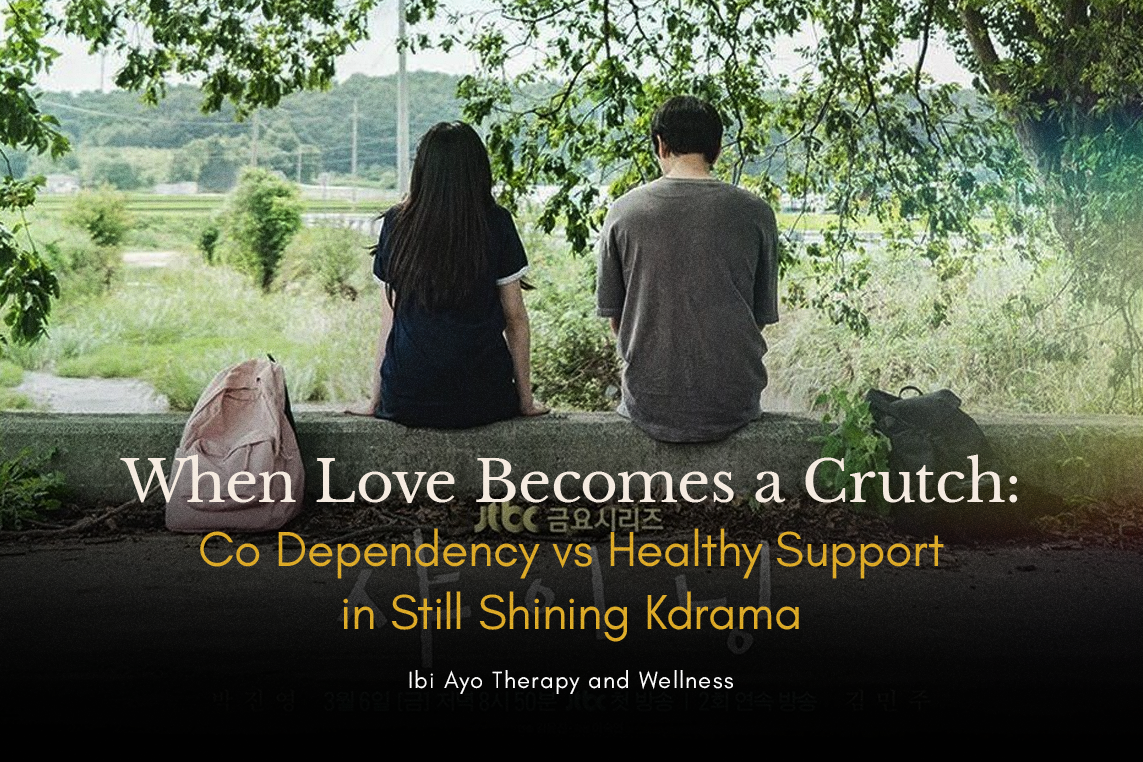
"Seeing you makes me feel at ease." Mo Eun-a
If you haven’t come across Still Shining yet, here’s the quick gist. It’s an ongoing K-drama (with only four episodes out at the time of writing) that follows Tae-seo and Eun-ah, two people who were once close and unexpectedly find their way back into each other’s lives as adults. The story leans into quiet moments, shared history, and a slow build of emotions rather than dramatic twists.
At first glance, it feels like a “first love meets again” story. But as the episodes unfold, you start to notice that their connection isn’t just about liking each other. There’s a sense that they lean on each other in ways that go beyond normal support.
When Love Starts to Feel Like a Lifeline
One thing the show does really well is showing how easily they fall back into each other’s space. It’s natural. Effortless. Familiar, almost automatic.
A few things stand out:
They don’t need much explanation to understand each other
They slip back into old roles without really questioning it
Being together seems to bring a kind of immediate emotional relief
And that’s where it gets interesting. Because it starts to feel like they’re not just choosing each other. They might also be relying on each other.
The Fine Line Between Comfort and Dependence
There’s nothing wrong with finding comfort in someone. That’s normal. But Still Shining quietly shows how that comfort can blur into something heavier.
You can see it in small ways:
Familiarity feels like safety
They gravitate toward what they already know, even if it’s not fully healthy
Emotional gaps get filled quickly
Instead of sitting with their own feelings, they seem to find relief in each other
The connection feels automatic
It doesn’t always come across as a conscious choice
None of this is spelled out directly, which is what makes it feel real. It’s more about what you notice than what is explained.
Why It Hits So Hard
Part of why this dynamic feels so relatable is because a lot of people have experienced something similar.
A relationship that feels easy because it’s familiar
A person who feels like “home” almost instantly
A connection you don’t question because it just works
But sometimes, what feels natural is just what we’re used to.
With only four episodes out so far, Still Shining is still unfolding. It hasn’t labeled anything or given clear answers. It simply shows two people reconnecting and lets viewers sit with what that looks like.
And maybe that’s the point.
It leaves you wondering not just if they should be together, but what they are to each other right now.
Keep an eye on how episodes 5–10 unfold. There’s a chance they’ll find a balance as they grow.
References
Beattie, M. (1986). Codependent no more: How to stop controlling others and start caring for yourself. Bantam.
Bowlby, J. (1988). A secure base: Parent-child attachment and healthy human development. Basic Books.
Hazan, C., & Shaver, P. (1987). Romantic love conceptualized as an attachment process. Journal of Personality and Social Psychology, 52(3), 511–524.
Still Shining. (2026). South Korean television series (Episodes 1–4). JTBC.