
Why You Feel Guilty After Setting Boundaries in Nigerian Families.
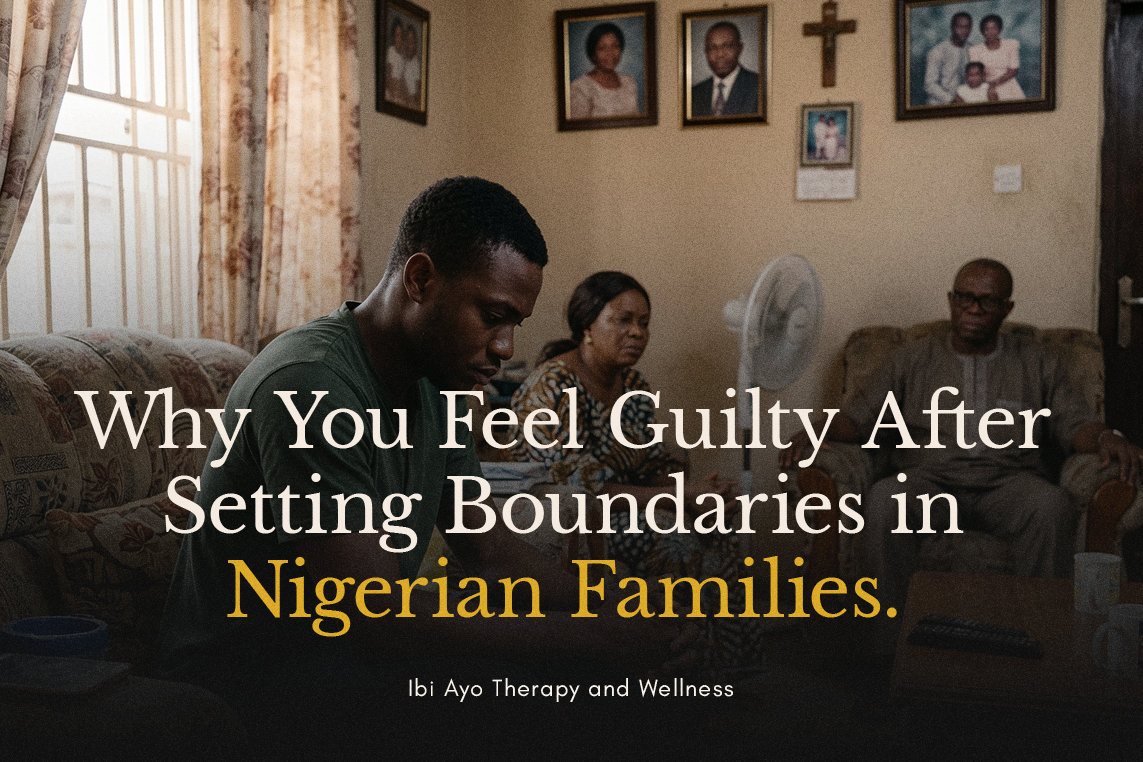
Setting boundaries in Nigerian families can feel difficult, but for most people, the hardest part is the guilt that comes afterwards. You finally say “no,” ask for space, or express how something made you feel, and instead of peace, you’re left questioning yourself.
Am I being disrespectful?
Am I becoming a bad child?
Am I too sensitive?
The Cultural Roots of Boundary Guilt
In many Nigerian households, obedience is closely tied to love, respect, and good character. Children are often raised to avoid questioning elders, endure discomfort, and prioritize family needs above their own. While these values can encourage community and responsibility, they can also make healthy boundary-setting feel wrong.
As a result, many people grow up believing that saying “yes” all the time makes them good, while saying “no” makes them selfish. This is why boundaries in Nigerian households can trigger such intense feelings of guilt, even when the boundary itself is completely reasonable.
Examples of Reasonable Boundaries That Can Still Feel Wrong
For example, saying any of the following may sound healthy and respectful but if you were raised to believe that setting limits is rude, your mind and body may still react with anxiety, shame, and fear:
- “I’m not comfortable discussing that.”
- “I need time to rest.”
- “I can’t help financially right now.”
- “I’d prefer some privacy.”
How Family Reactions Can Deepen the Guilt
Sometimes, family members may reinforce these feelings by calling you “proud,” “disrespectful,” or “too influenced by Western culture.” These reactions can make you doubt yourself and feel pressured to return to old patterns simply to keep the peace.
Discomfort Does Not Mean You Are Doing Something Wrong However, discomfort does not always mean you’re doing something wrong. Sometimes, it simply means you’re doing something unfamiliar. Many people are used to prioritizing everyone else’s comfort before their own. So when they finally begin protecting their emotional wellbeing, it can feel deeply unnatural. This is especially true in environments where personal space, emotional expression and independence is not always encouraged.
What Healthy Boundaries Actually Are
It is important to remember that healthy boundaries are not punishments or acts of rebellion. They are tools that help protect your mental and emotional wellbeing. Boundaries can also:
Reduce resentment
Create more honest, sustainable relationships over time
Help you care for yourself while maintaining relationships with others
Learning to Tolerate the Discomfort
Learning to tolerate the discomfort that comes with boundary-setting is part of the process. Not everyone will immediately understand your limits, especially if they are used to having unlimited access to your time, emotions, or decisions. However, that discomfort does not cancel out your right to have boundaries.
You Can Love Your Family and Still Have Boundaries
You can love your family deeply and still need space, rest and privacy. Setting boundaries does not erase your respect for your family values, nor does it mean you are rejecting your culture. It simply means you are learning how to care for yourself while still maintaining relationships with others in a healthier and more balanced way.
Over time, setting boundaries may begin to feel less frightening and more natural. Not because you care less about your family, but because you’re learning that your needs matter too. Finally, feeling guilty after setting a boundary does not automatically make you a “bad child.” Sometimes, it simply means you’re unlearning patterns that taught you to ignore yourself in order to keep others comfortable.
If you're ready to start prioritizing your emotional wellbeing, fill out our onboarding form here to get started.
References
Martin, S. (2025). Why setting family boundaries triggers you.
Oh, Falbo, T., & Lee, H. Y. (2020). Culture moderates the relationship between family obligation values and the outcomes of Korean and European American college students.
Rudy, D., & Halgunseth, L. C. (2005). [Title not specified in source].