
What You Inherited: How Mother-Daughter Trauma Shows Up in Your Life
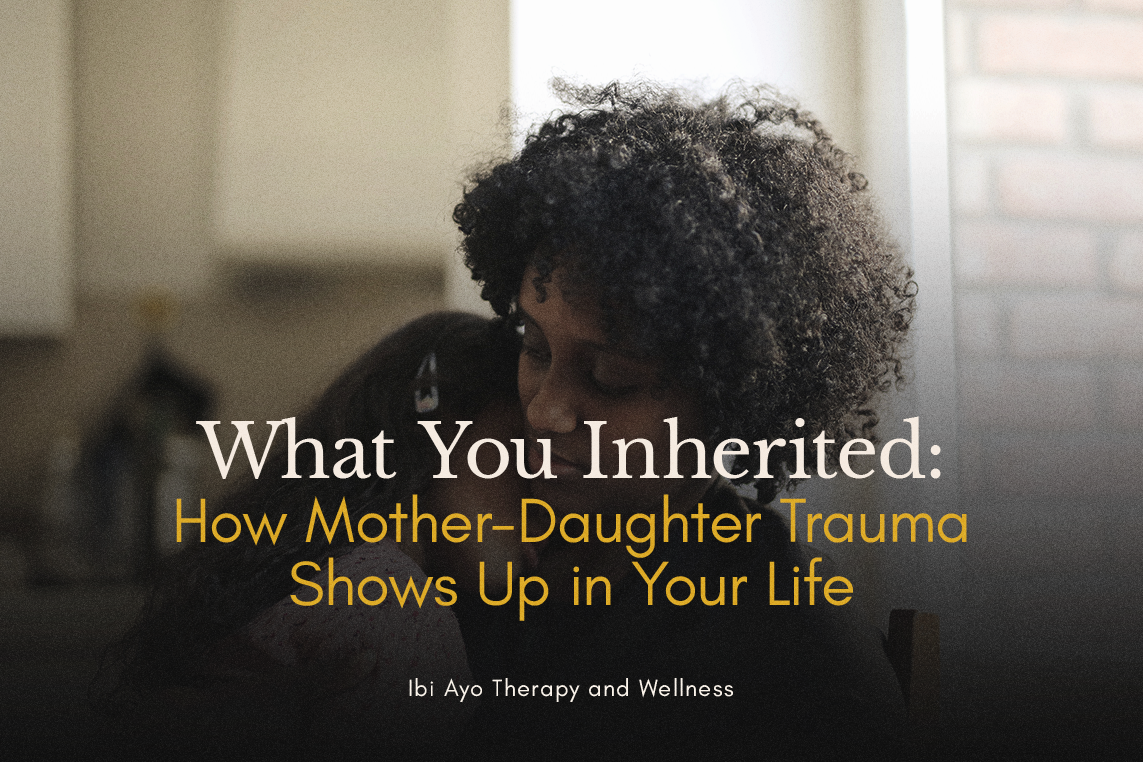
"Have you ever caught yourself reacting to something and thought, wait, this reaction seems familiar... That's her." If that question hit a little close to home, you're not alone so many of us are walking around carrying things we didn't even know were packed into our bags. Things we didn't choose. Things that were handed to us, quietly, sometimes lovingly, sometimes painfully, by the women who raised us. This isn't about blaming our mothers. Most of them did the very best they could with what they had, and what they knew.
But the truth is, unresolved trauma doesn't just stay with one person.
It travels.
It shapes.
It shows up, sometimes in the quietest, most unexpected corners of our lives.
So let's talk about it.
What Is Generational Trauma, really?
Generational trauma, sometimes called intergenerational or inherited trauma, is exactly what it sounds like. It's the emotional and psychological wounds that get passed down from one generation to the next, often without anyone even realizing it's happening. It's not always dramatic. It doesn't always look like something you'd see in a movie.
Sometimes it looks like a mother who never said "I love you" out loud, not because she didn't feel it, but because nobody ever said it to her either.
"Trauma that doesn't get processed doesn't disappear.
It simply finds new places to live, often in the next generation."
And in the mother-daughter relationship specifically, the transmission can be incredibly intimate.
Because daughters watch their mothers.
They absorb not just what is said, but what is felt, avoided, suppressed, and silently endured.
How It Shows Up in Your Life
Here's the part I really want you to sit with.
Because generational trauma doesn't always announce itself.
Sometimes it's hiding in plain sight, in the way you relate to yourself and the people around you.
You might recognize some of these 👇🏾
In your relationships:
You find yourself attracting emotionally unavailable people, or struggling to trust even when there's no real reason not to.
In your self-esteem:
There's a voice in your head that is constantly critical, never quite satisfied, and it sounds a lot like someone you know.
In how you handle emotions:
You either feel everything all at once and don't know what to do with it, or you've learnt to shut it all down completely.
In your body:
Anxiety that lives in your chest.
A stomach that tightens in certain situations.
Tension you've just accepted as "normal."
In your boundaries:
Saying no feels dangerous.
Disappointing people feels unbearable.
You give and give until there's nothing left.
In how you mother yourself:
You struggle to be compassionate with yourself in ways you'd easily be compassionate with others.
Sound familiar?
It's okay if it does.
Recognizing the pattern is actually the beginning of something really beautiful.
Why the Mother-Daughter Bond Is So Powerful
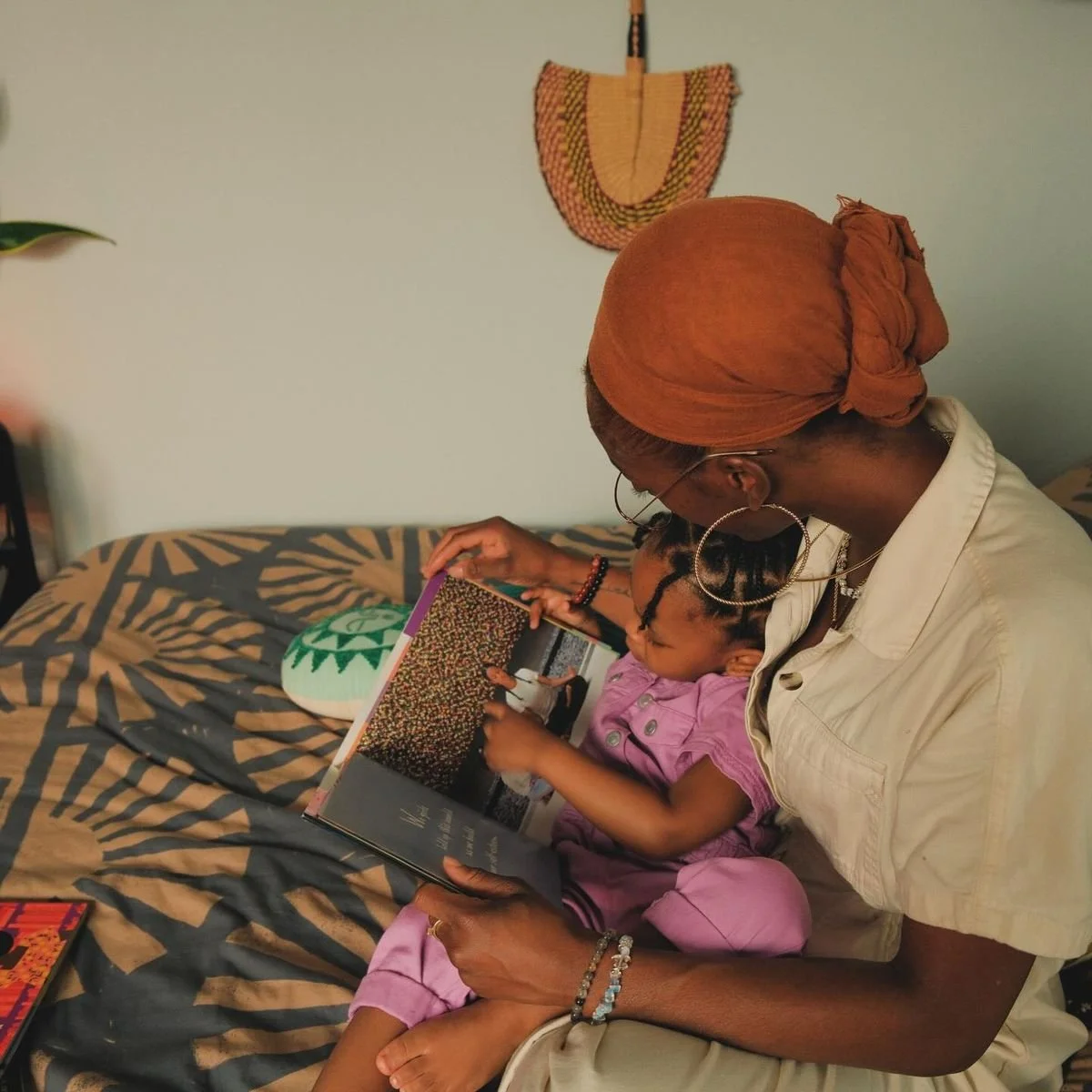
Of all the relationships we navigate in life, the one with our mother is often the most layered.
She is our first mirror. The first person who showed us, consciously or not, what it means to be a woman,
how to relate to our emotions, how safe the world is, and whether we are truly loveable.
When that relationship carried pain, even alongside love, it leaves marks.
Not because our mothers were monsters, but because they were human.
Carrying their own unhealed things.
Doing the best they could.
"Your mother's story doesn't have to be your story.
But you do have to know her story to understand your own."
And this is where things get really interesting, and honestly, really hopeful.
Where Healing Begins?
I want to be honest with you: this work is not always easy.
But it is so, so worth it.
Healing generational trauma doesn't mean cutting your mother off or rewriting history.
It means becoming curious.
It means asking, gently, with compassion,
"Where did this come from? And does it still serve me?"
Here are a few places to begin
Name what you're carrying.
You can't heal what you won't acknowledge.
Start by simply noticing the patterns, in your reactions, your relationships, your inner dialogue.
Get curious about her story.
What was your mother's childhood like?
What did she inherit?
Understanding her humanity doesn't excuse harm, it gives you context.
Grieve what you didn't get.
This is big.
You are allowed to mourn the mother you needed and didn't have, even if you also love the one you do have.
Reparent yourself.
Begin to give yourself the gentleness, validation, and safety you may not have received.
This is a practice, not a one-time event.
Seek support.
Therapy is not a luxury, dear, it is a gift you give yourself.
These patterns run deep, and having a professional space to explore them changes everything.
You Are Not the Sum of What Was Passed Down to You
The patterns stop when someone decides to look at them clearly, feel them fully, and choose something different.
That someone can be you.
That work can start today, even just by reading this and saying, "Yes, I see myself here."
You don't have to carry what was never yours to begin with.
And you absolutely don't have to do this alone.
References
Iyengar, U., Kim, S., Martinez, S., Fonagy, P., & Strathearn, L. (2014).
Unresolved trauma in mothers: Intergenerational effects and the role of reorganization. Frontiers in Psychology, 5, 966.
Iyengar, U., Rajhans, P., Fonagy, P., Strathearn, L., & Kim, S. (2019).
Unresolved trauma and reorganization in mothers: Attachment and neuroscience perspectives. Frontiers in Psychology, 10, 110.
Yehuda, R., & Lehrner, A. (2018).
Intergenerational transmission of trauma effects: Putative role of epigenetic mechanisms. World Psychiatry, 17(3), 243–257.
Kellermann, N. P. F. (2001).
Transmission of Holocaust trauma, An integrative view. Psychiatry: Interpersonal and Biological Processes, 64(3), 256–267.