
Fawning as a Trauma Response: Why You Struggle to Say No
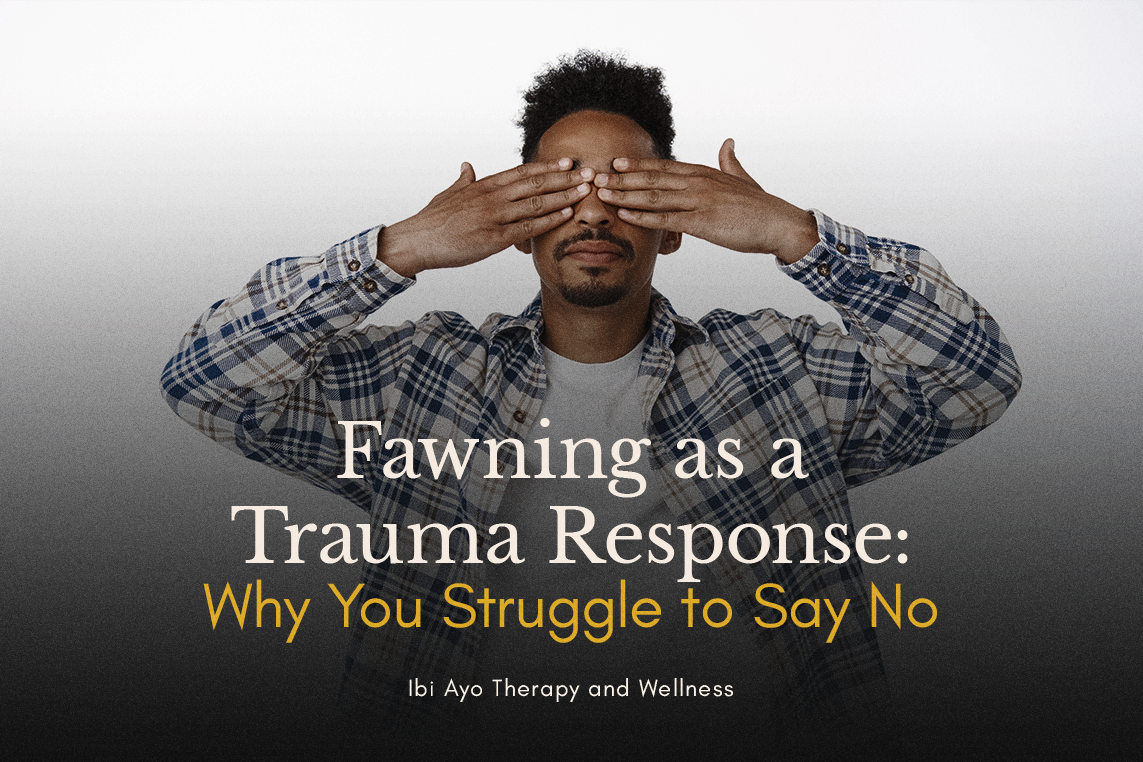
I keep saying yes to others at the cost of myself and just can’t understand why…
As human beings, our need for safety and connection is super fundamental. When either of these feel threatened, our bodies respond instinctively to protect us using the well known responses of fight, flight, freeze. However, there is a fourth, often unrecognized response, fawn. In this post we’ll focus on learning about fawning as a trauma response.
The term fawning was coined by psychotherapist Peter Walker, who described it as a survival strategy aimed at appeasing a perceived threat. Fawning is linked most times to trauma experienced within the context of a relationship (relational trauma) where such relationship feels unsafe and unstable. Rather than confronting or escaping the perceived danger, fawning as a response adapts by becoming more agreeable, accommodating, and valuable to the threat. It is developed from an internalized belief that love, safety, connection and survival depends on appeasing others.
At its core, the fawn response says “I will set aside my own needs, boundaries, and comfort to be appealing and therefore safe”. With this core statement, needs become negotiable, boundaries become porous or nonexistent, and personal comfort becomes secondary. While this might work as a short-term survival strategy, it often leads to a deep disconnection from one’s authentic self.
Fawning can show up in ways such as:
Difficulty setting and maintaining boundaries
Low self-esteem and self-worth
Over-accommodating others at personal cost, chronic people pleasing or overextending oneself
Suppressing personal needs and desires
Turning negative feelings inward (self-blame or self-criticism)
Codependent relationship patterns
Masking or hiding one’s authentic self
Invalidating one’s own thoughts and feelings
In everyday life, this might look like
Saying yes to an outing when you truly need rest
Laughing along even as the recipient of hurt just to avoid upsetting others
Taking on extra responsibilities to avoid upsetting others
Always apologizing when you’ve done nothing wrong
Joining activities or groups primarily to gain approval
Feeling responsible for other people’s emotions while neglecting your own
Experiencing guilt or shame when attempt to or assert your boundaries and needs
As you read this, you may find yourself pausing to reflect on whether this trauma response resonates with you. This is good because awareness, as simple as it might sound, is an important first step. With awareness, an automatic process becomes visible and recognized, making it possible to gently rebuild a relationship with your own needs, boundaries, and sense of self.
Approaching this process with self-compassion is essential. Rather than judging yourself for these patterns, try to understand them as strategies that once helped you stay safe. Find a space, whether through therapy or other supportive environments, that can help you process these experiences, deepen your understanding, and begin developing healthier ways of relating to yourself and others.
Healing from a fawn response does not mean you need to become harsh, closed off or without care for others. It simply means learning to include and consider your self (needs, emotions, thoughts) in the equation. You can start small and practice taking a pause before saying yes to any request, even if for just a few seconds. This action creates a space between the automatic response and a conscious thought.
Lastly, remember that change doesn’t happen in an instant, but needs patience, support, and consistent intentionality to happen.
References
Ryder, G. (2022, January 10). Fawn Response: Adding to The Fight, Flight, or Freeze Framework. Psych Central. https://psychcentral.com/health/fawn-response
Schwartz, A. (2021, March 9). The Fawn Response in Complex PTSD | Dr. Arielle Schwartz. Arielle Schwartz, PhD. https://drarielleschwartz.com/the-fawn-response-in-complex-ptsd-dr-arielle-schwartz/#.Y_zyg7TMLJ8
Clayton Ph.D., I. (2023, March 24). What Is the Fawning Trauma Response? Psychology Today. https://www.psychologytoday.com/us/blog/emotional-sobriety/202303/what-is-the-fawning-trauma-response