
Online Therapy vs In-person Therapy: Which is right for you?
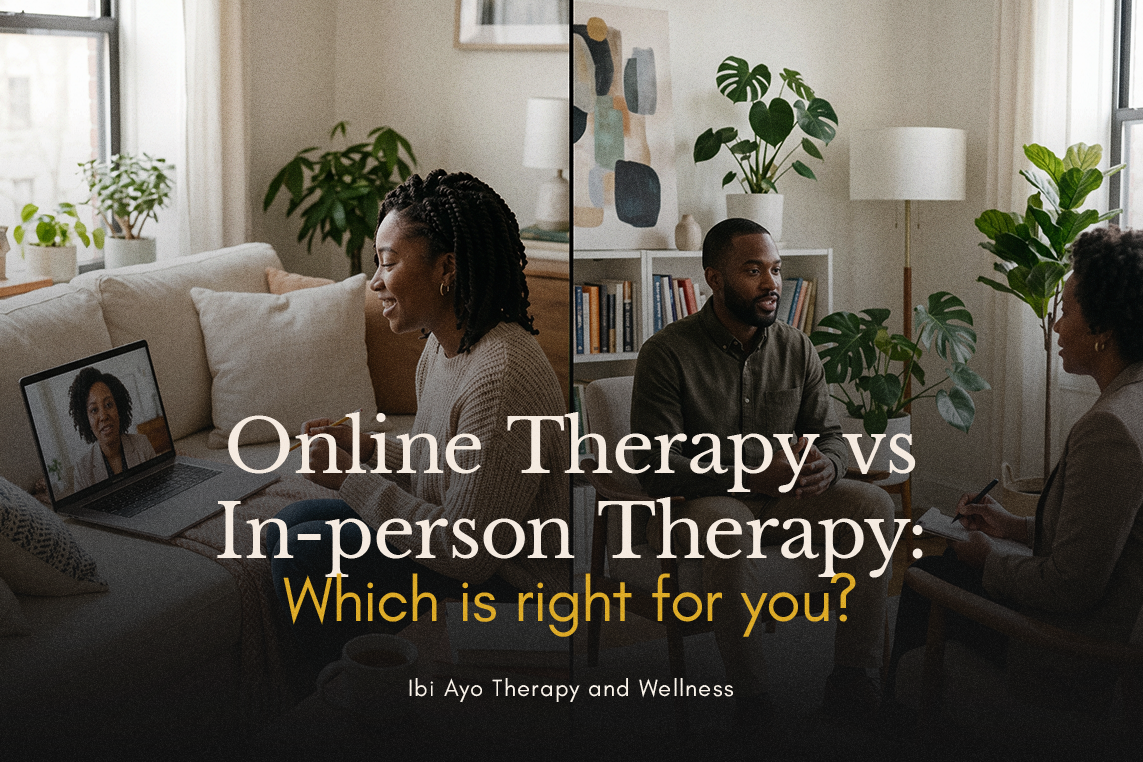
Taking the step to seek therapy and support for your mental health is incredibly important. However, with the rise of the virtual world following COVID, another important question has emerged: should you seek support through virtual or in-person therapy?
In this blog post, we will look at the key differences between the two and identify their benefits and limitations to hopefully help you answer the important question of which option is right for you.
In-person Therapy
This is the traditional form of therapy that involves face-to-face sessions with a therapist, typically in a private office setting. Some therapists may also offer sessions outdoors or while walking, provided there is informed consent and adequate consideration for privacy.
Benefits/Pros of In-Person Therapy
Neutral and dedicated therapeutic space
Direct and stronger interaction that can strengthen the therapeutic relationship
Easier for the therapist to observe non-verbal communication and cues
Allows for a wider range of therapeutic modalities and intervention exercises
Fewer distractions during sessions
Preferred by individuals who value face-to-face interaction
Can be more practical for family or couples therapy, allowing for better observation of dynamics
Potential Limitations/Cons of In-Person Therapy
Limited therapist options depending on your location
Difficulty with accessibility for persons in far locations or for those with tight schedules that can’t accommodate the transit time
Less flexibility when scheduling appointments
Online Therapy
This format of therapy, also known as teletherapy or virtual therapy involves the provision of mental health support through a secure online platform. In online therapy, you meet with your therapist remotely, and the experience is often similar to that of in-person therapy. A standard online session typically takes place through a video call with audio and visual communication. However, some platforms and practices also offer sessions via phone calls or text-based communication.
Benefits/Pros of Online Therapy
Better accessibility and convenience
Increased access to a wider range of therapists
More flexible scheduling options
More discretion for individuals who may feel hesitant about attending therapy in person
Continuity of care when relocating or travelling
Suitable for persons with mobility limitations or health concerns
Potential limitations/Cons of Online Therapy
Sessions rely on technology and a stable internet connection
Finding a private space at home may be challenging in some situations
Potential disruptions due to technical difficulties
Limited observation of non-verbal communication cues
More severe forms of mental illness may require additional support beyond what online therapy alone can provide
Major comparisons between In-person and Online Therapy
Comfort and Convenience: some people might find leaving their familiar space and going to a therapy office more convenient and preferable for therapy sessions while other persons might find it more convenient to have session from the comfort of their space and familiar settings.
Privacy Considerations: In-person provides a controlled environment designed to ensure privacy, which some might find reassuring. On the other hand, online therapy can offer discretion depending on access to a private space for sessions.
Accessibility: In-person therapy might be more suitable for persons who have easy access to therapists within their area and reliable means of transportation. Online therapy increases accessibility by removing geographical barriers through the use of internet-based platforms.
Connection in session: Meaningful connection can be established in both formats of therapy according to research; however, personal preference often plays a role. Some individuals might feel more connected with the face-to-face option that in-person therapy provides, while some others might appreciate the reduced pressure that online therapy provides.
Effectiveness: This is a common question asked, and the answer is that both formats of therapy are effective, and this is backed up by research and lived experiences of people. The effectiveness of therapy may depend on factors such as the nature and severity of the concern being addressed and the type of treatment required. While both options can be effective, that does not mean either option is the best fit for everyone.
So, which option is right for you?
Consider asking yourself the following questions:
Do I have a private space where I can comfortably attend therapy sessions?
Is the transit to the therapy office practical for my schedule
Am I okay and comfortable communicating through video calls?
Would I benefit from the structure of in-person therapy?
Is face-to-face interaction and connection a top priority for me?
Is flexibility a priority for me?
Hybrid Therapy
A final option to consider is a hybrid approach, which combines both in-person and online therapy sessions. This model provides flexibility while still allowing opportunities for face-to-face connection when needed. With this option, you don’t necessarily need to choose between one and the other, but instead you get to enjoy the best of both worlds.
Finally…
When trying to decide which option to choose, what matters most is finding a format that helps you feel supported and able to engage consistently in the therapeutic process.
Whether you choose to meet with a therapist online or in person, support is possible in either setting.
The most important step is reaching out and beginning the journey toward better mental health.
Begin Your Journey with Ibi Ayo Therapy & Wellness
Whether you're drawn to the comfort of online sessions or prefer the structure of meeting in person, Ibi Ayo Therapy & Wellness offers both, so you can start in whatever way feels right for you.
Taking that first step is the most important one. Fill out our onboarding form today and let us match you with the right therapist and format for your needs.
Your journey toward better mental health starts here.
References
Baulch, D.J. (2025). Why online therapy might work better for you than in-person sessions. Inner Melbourne Psychology. https://www.innermelbpsychology.com.au/why-online-therapy-might-work-better-than-in-person/.
Brenner, B. (2023). The Benefits of In-Person Therapy. Therapy Group of DC. https://therapygroupdc.com/therapist-dc-blog/the-benefits-of-in-person-therapy/.
Cherry, K. (2018). What You Need to Know About Online Therapy. Verywell Mind. https://www.verywellmind.com/what-is-online-therapy-2795752.
Deering J.D., M. (2025). Online vs. In-Person Therapy: Pros, Cons, and How to Choose the Right Option. Psychology.org. https://www.psychology.org/resources/virtual-therapy-vs-in-person/.
Health, L. (2025). Online Therapy vs In-Person: Advice from Therapists Who Provide Both - LifeStance Health. LifeStance Health. https://lifestance.com/blog/online-therapy-vs-in-person-advice-from-therapists-who-provide-both/.