
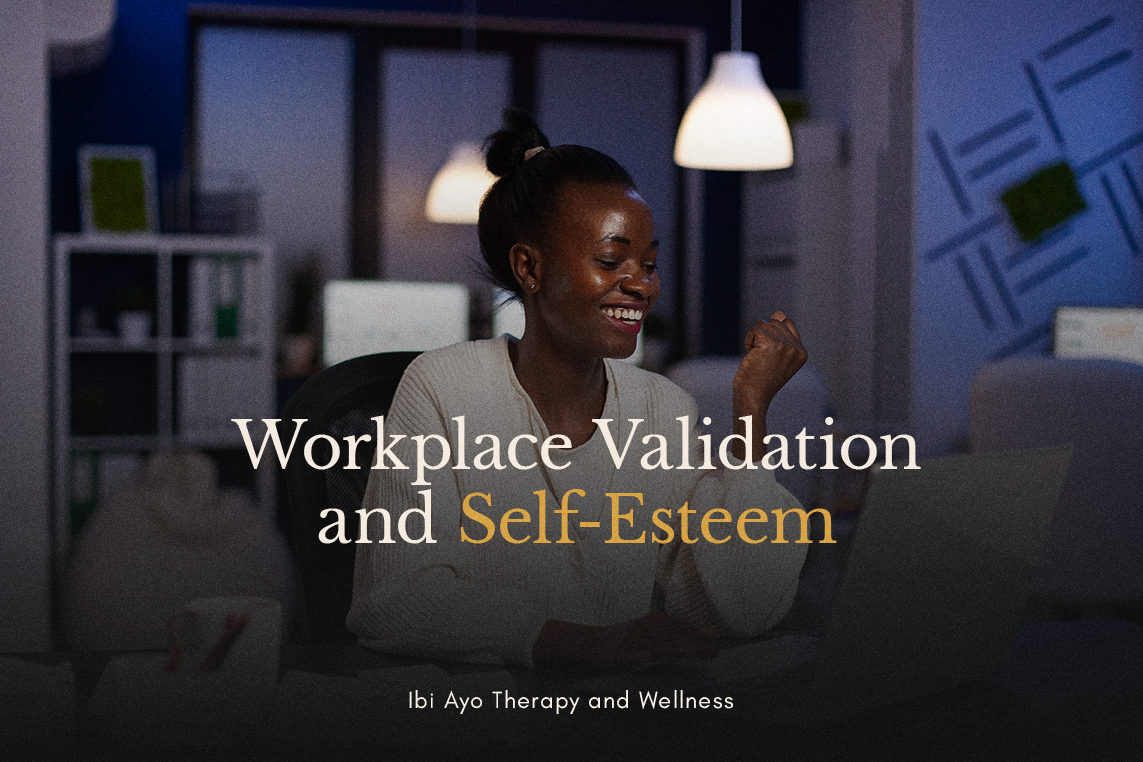
I invite you to pause and reflect on this important question; it is one that I ask myself too.
“Who am I when no one is clapping?”
As I write this, I want to acknowledge that I am not exempt from this experience. In fact, I would probably read this back to myself in the third person, too.
We need to admit that receiving approval and recognition feels amazing. Whether it is a passing compliment, a simple “well done,” or a significant acknowledgement of our contributions, being seen and appreciated can be deeply affirming.
And honestly, there is nothing wrong with receiving or enjoying approval.
Where it becomes a cause for concern is when external recognition becomes our only source of validation and when, without it, we begin to question who we are and the extent of our value.
When the recognition disappears or dwindles, should your confidence disappear with it?
Absolutely not.
If your answer was yes, that is where we may need to pause and reflect.
Let’s begin with some clarification of terms
Confidence says:
“I believe I can handle this task.”
Validation says:
“Someone recognizes what I have done.”
Self-esteem says:
“Even when I fail at a task, I know I still have worth and value.”
You can be confident at work and still depend significantly on external validation.
You can receive the external validation you desire and still struggle with self-esteem.
But you can also make a mistake at work without allowing that mistake to define who you are.
We need validation, yes, but not as proof that we are worthy.
In Nigerian communities, and in many other cultures and communities, career achievement and recognition often carry significant social meaning.
We are frequently bombarded with questions like;
“What do you do?”
“Where do you work?”
“How much are you paid?”
“Have you been promoted?”
“At your age, don’t you think you should be somewhere better?”
These questions may seem harmless, and sometimes they are simply expressions of curiosity or concern. But over time, they can contribute to the idea that our professional achievements are a measure of our overall worth.
When work is no longer simply about work, our job title, salary, position, and performance can very quickly become a primary part of our identity.
And that is where things can become complicated.
Interactive Break
If your job title disappeared tomorrow, what would still be true about you?
I invite you to pause and answer this to yourself.
Perhaps your kindness? Resilience? Creativity? Values? Ability to learn? Character? Journey? Or your skills?
The real test of self-esteem is not necessarily how you feel when everyone is clapping and giving you recognition.
It is how you see yourself when the room is quiet.
Why Do We Seek Workplace Validation?
There are many reasons we may look to our workplace for validation. Some of them include:
Confirmation of competence - We want reassurance that we are good at what we do.
Imposter syndrome - We may doubt our abilities and look to external praise to reassure us that we belong.
The desire for acceptance - Being recognized can make us feel valued and accepted within a team.
Fear of rejection - We may become overly concerned about disappointing others or being perceived negatively.
A sense of belonging - Recognition can reassure us that we are seen as a meaningful part of the workplace.
None of these needs make us weak or needy. They are human.
The goal is not to eliminate our desire for recognition.
The goal is to ensure that recognition does not become the foundation upon which our self-worth rests.
How Can We Build Healthy Self-Esteem at Work?
1. Identify the source of your self-doubt
Self-reflection and journalling can be helpful tools for exploring where our need for external validation comes from.
Ask yourself:
“What do I believe about myself when I am not being praised?”
Understanding the root of our self-doubt can help us begin to separate our identity from our performance.
2. Practice internal validation
Celebrate your accomplishments, including and especially the ones nobody else sees.
You just pushed through an incredibly challenging task.
You handled a difficult conversation.
You learned something new.
You kept going when you wanted to give up.
Recognize that. Celebrate that. Not every achievement needs an audience to be meaningful.
3. Explore and discover yourself outside of your job
What are your strengths, traits, values, interests, skills, and qualities?
What makes you ‘you’ beyond your professional identity?
Developing a stronger sense of your core identity can help create a healthy separation between who you are and what you do.
4. Embrace learning and growth
You will make mistakes.
You will have difficult days.
You may receive criticism.
You may be overlooked.
You may not always get the promotion.
None of these experiences have to become a verdict on your worth.
Allow feedback to inform your growth without allowing it to determine your value.
Interactive Break
Take a moment and complete these sentences honestly;
1. Without my job title, I am…
2. Five things I like about myself outside of my work performance are…
3. Something I am proud of that no one at work knows about is…
4. The qualities I have and recognize in myself, even when no one else claps, are…
5. When I make a mistake at work, what do I tell myself about who I am?
Closing Thoughts
Research has linked workplace recognition and validation with employee outcomes, so it is important to establish that recognition in the workplace absolutely matters.
You are allowed to desire validation.
You are allowed to enjoy being seen.
You are allowed to feel good when your work is acknowledged.
But more importantly, you should be able to know that you matter and that you have worth even when nobody says so.
Let praise, feedback, and recognition encourage and inform you, not define you.
A strong sense of self-worth can provide an important foundation for confidence, motivation, and growth.
So perhaps the goal is not to stop enjoying the applause.
Perhaps it is to become so grounded in who you are that the applause becomes an affirmation of your work, rather than the evidence of your worth.
When the applause quietens or stops, what will you still believe about yourself?
Would you still clap for yourself?
If you're looking to understand who you are beyond your work, responsibilities and the expectations of others, therapy can help you explore your identity, reconnect with your needs and make room for a more fulfilling life. Fill out our onboarding form to get started.
References
Miller, K. (2026, September 8). How to gain confidence at work. Harvard Business School. https://online.hbs.edu/blog/post/how-to-gain-confidence-at-work
Kreze, A. (2024, July 29). Overcoming your need for constant validation at work. Real Life Counselling. https://www.reallifecounselling.com/overcoming-your-need-for-constant-validation-at-work/
Del Re, M. (2025, June 6). Self-Worth & workplace validation: Breaking the false equation. LinkedIn. https://www.linkedin.com/pulse/self-worth-workplace-validation-breaking-false-equation-monica-del-re-1lhmc