
Why Workplace Mental Health Matters in Nigerian Organizations
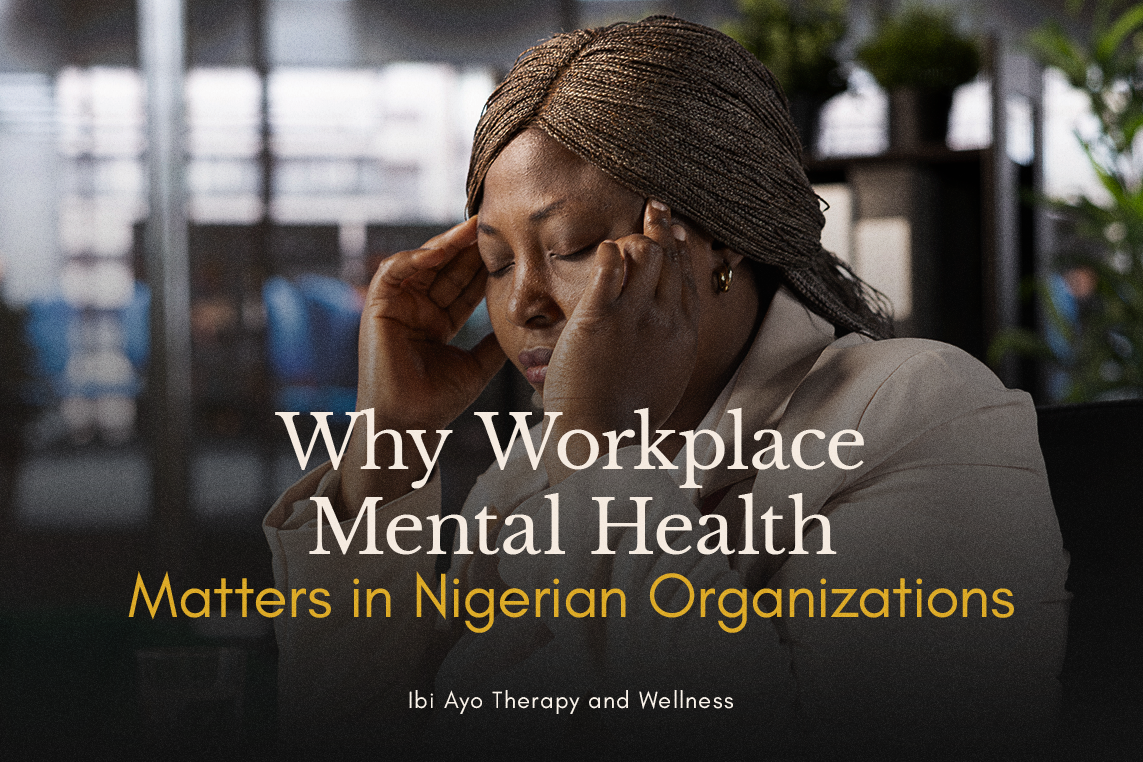
"We tend to misdiagnose chronic stress and burnout as underperformance." Jennifer Moss
Think about the last time someone on your team seemed off. Maybe they were constantly fatigued or making more mistakes than usual. Chances are, it might be hinting that something deeper was going on.
Stress, anxiety, burnout, and fatigue are now the leading causes of poor employee mental health and before long, they affect the whole team.
The World Health Organization (WHO) estimates that mental health disorders cost the global economy $1 trillion every single year in lost productivity.
Why Nigerian Organizations Can't Afford to Ignore This
There's sometimes a tendency in Nigerian work culture to push through. But the truth is, no one leaves themselves at home when they come to work.
When employees don't get the support they need:
Productivity drops, even when people are physically present
People quietly start looking for the exit
Stress spreads. Burnout in one person can affect an entire team
The cost of replacing staff keeps climbing
On the flip side, when organizations take mental health seriously, people notice. They feel valued. They stay longer, give more, and genuinely care about the work they're doing.
So What Can You Actually Do?
You don't need to overhaul your entire HR strategy overnight. There are two practical, proven ways to start making a real difference for your team.
Mental Wellness Workshops
Sometimes, employees just need a space to breathe and the right tools to manage what they're carrying.
Mental wellness workshops create exactly that. They give your team:
A safe, structured environment to talk about what's really going on
Practical strategies for managing stress, anxiety, and burnout
A sense that their employer actually sees them as human beings, not just resources
Better habits that carry over into their daily work and life
At Ibi Ayo, we don't do one-size-fits-all. We take time to understand what's unique about your organization, your industry, your team dynamics, your specific pressure points, and build workshops around that. We understand that what a startup team of 20 needs looks very different from what a corporate team of 200 needs.
Employee Assistance Program (EAP)
Some challenges are too personal for a group workshop. That's where we introduce the Employee Assistance Program.
An EAP gives employees access to confidential, professional support, usually through short-term therapy sessions and wellness check-ins, so they can work through what's weighing on them without it bleeding into their work.
Here's what that looks like in practice:
Short-term individual therapy: A private space to process stress, relationship issues, grief, anxiety, or anything else that's getting in the way
Wellness check-ins: Regular touchpoints to catch problems early, before they become crises
Ongoing resources: To help employees build better coping skills over time
Ibi Ayo currently offers EAP services to small and medium-sized organizations across Nigeria. We've designed it to be accessible.
This Is a Leadership Decision
Investing in your employees' mental health is strategic. The organizations that will attract and keep the best talent in Nigeria are the ones that show their people they matter beyond their output.
Mental wellness at work is becoming the baseline expectation. And the earlier your organization builds that culture, the better positioned you'll be.
Ready to Take the Next Step?
If this resonates with you and you'd like to explore what mental wellness support could look like for your organization, we'd love to hear from you.
Send us an email at therapy@ibiayo.comand let’s start the conversation.
References
Deloitte. (2022). Mental health and employers: The case for investment, pandemic and beyond. Deloitte Insights.
International Labour Organization (ILO). (2022). Workplace well-being.
Lancet Psychiatry. (2016). Work productivity and activity impairment associated with mental health conditions. The Lancet Psychiatry, 3(9), 832–843.
Nigeria Economic Summit Group (NESG). (2023). Human capital development and workplace productivity in Nigeria.
World Health Organization (WHO). (2022). Mental health in the workplace.