
What It Means to Heal as an African: Unlearning and Rebuilding
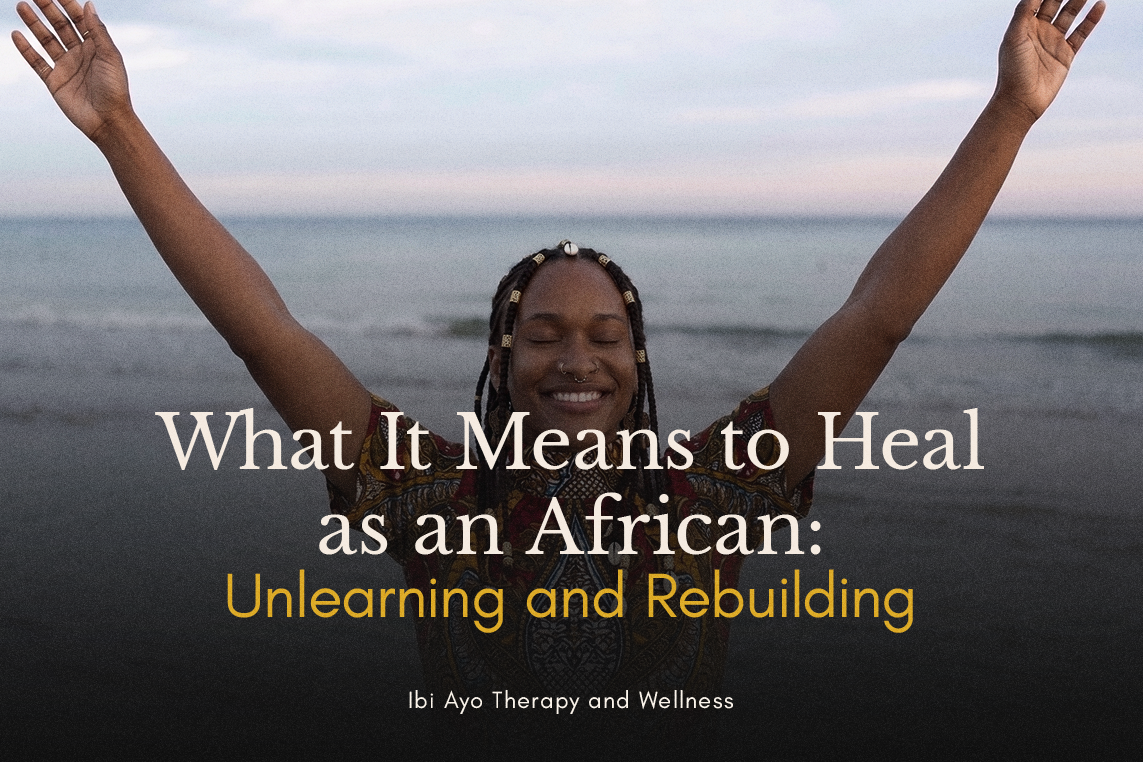
What does healing look like as an African?
It often looks like pushing against the grind. It involves navigating healing amidst culture, expectations, deeply rooted beliefs and misconceptions. Some of these barriers are external, shaped by the communities and environments we grow up in. Others are internal, formed quietly over time as we absorb cultural messages and beliefs without even realizing it.
Healing as an African, therefore, requires us to reflect, question, unlearn, rewrite and rebuild our personal narratives and perspectives. At the same time, it calls us to navigate and challenge the many beliefs, expectations, and worldviews that exist within our homes and communities.
This is hard work. Yes. But it is necessary.
I like to think that every time someone chooses to question harmful beliefs and embrace healthier perspectives, they create space for those who come after them. As each generation does this, we begin to dismantle age-old misconceptions and build a more supportive environment for healing.
We are taking apart, brick by brick, the beliefs and narratives upon which our culture has been built. We live within this culture, and we should not have to simply "manage" until we can no longer cope.
So, two very important questions to ask yourself:
What are some common beliefs, narratives, or misconceptions about mental health in my community?
What beliefs or worldviews have I accepted without realizing that they may be acting as barriers to my healing process?
Reflecting on these questions is an important part of what it means to heal as an African. Healing begins with one important step, and that is to acknowledge the reality of mental health.
"Man up", “There's nothing wrong with you”, "Be strong!" These and many other phrases have echoed across many African homes. While they are often spoken with good intentions, they have left a trail of negative impacts and lasting effects across generations, contributing to cycles of generational trauma and patterns. These messages teach people to suppress, dismiss, deny, and suffer in silence. However, no matter how deeply ingrained these messages are, they do not and cannot erase the reality or existence of mental health challenges.
Let's look at some of these misconceptions, shall we?
And if there are others you know but don't see here, take a moment to reflect on them as well. What would you add? And what would be a way to challenge them?
Mental health doesn't exist
Say it louder for those in the back… fa fa fa FALSE.
Yes, this is absolutely false. Mental health does exist and denying it only causes harm. Mental health is just as real as physical health and deserves attention and care.Talking about mental health issues is taboo
This is something that needs to be unlearned through compassion and empathy.
When someone is struggling, hurting, or in crisis, compassion and empathy communicate a simple but powerful message: "I see you. It's okay to talk about it. Your pain is real."Men shouldn't be vulnerable or have mental health issues, AKA "Be a man" or "I am an African man"
Men are human beings with a mind and body that require care and attention. Men can be vulnerable. They have emotions, they experience pain, and they face struggles too.
If you are a man reading this, here is your reminder: your mind and heart need tending to as well.Mental health struggles are a sign of weakness
Mental health challenges can affect anyone, regardless of their strength, resilience, or background.
Seeking help is not a sign of weakness; rather, it is an act of courage, self-awareness, and strength.What happens in the family stays in the family
This is a particularly harmful narrative because it often creates a culture of silence around abuse, trauma, grief, and mental health struggles.
Privacy should not come at the expense of a person's mental well-being. Sometimes healing requires speaking up, reaching out, and seeking support beyond the family system.
Final thoughts
True healing requires us to move beyond these unhealthy narratives. It creates room for openness, honesty, vulnerability, curiosity, compassion, empathy, and understanding. It invites us to acknowledge that strength is not the absence of struggle but the courage to face it.
Yes, we are unlearning, but with the purpose of rebuilding. We are rebuilding homes and communities where shame and stigma around mental health issues are challenged and where seeking support is normalized.
We are shaping a generation and a culture that embraces care. This change matters not only to us but also to the generations that will come after us.
It can start with you. So, what does healing look like for you?
Ready to Begin Your Wellness Journey?
You don't have to figure this out alone. Whether you're just starting to acknowledge your mental health or you've been on this road for a while, there's a place for you here.
Take the first step today. Fill out our onboarding form and let us walk alongside you on your wellness journey.
Get Started
Your healing matters. And it starts now.
References
Agyapong, B., Obuobi-Donkor, G., Burback, L., & Wei, Y. (2023). Internalized stigma among people with mental illness in Africa, pooled effect estimates and subgroup analysis on each domain: systematic review and meta-analysis. BMC Psychiatry, 23, Article 470.
Asante, K. O., & Andoh-Arthur, J. (2020). Masculine norms and mental health of African men: What can psychology do? In Masculinities in Africa: Perspectives from the social sciences. ScienceDirect.
Baidoo, A. A., Darkwah, M. A., Tetteh, E. N., Asante, A. A., Kwadwo, M. O., Koomson, M., & Obeng, M. A. (2025). Effects of stigma on help-seeking behaviour in mental health: A community-based study in Ghana's Sekyere South District in the Ashanti region. PLOS ONE.
Peahl, A., et al. (2024). The rationale for South Africa to prioritize mental health care as a critical aspect of overall health care. ScienceDirect.
Tembo, M., Ward, P., & Moona, W. (2025). The role of stigma in help-seeking strategies among African migrants in Australia: A qualitative study. International Journal of Mental Health Nursing.
The Health Pulse. (2026, May 5). Mental health treatment gap in Africa.