
Hypervigilance in Daily Life: When Your Nervous System Won’t Switch Off
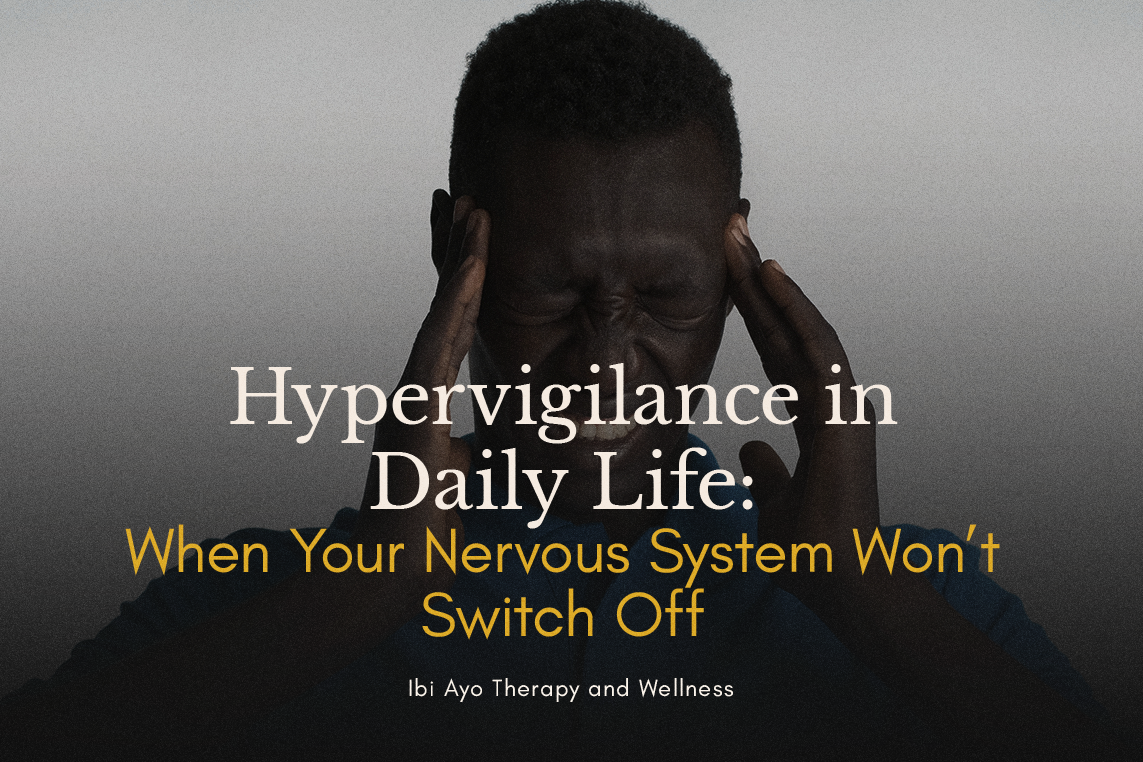
You know that feeling when NEPA takes light and you instantly jump up like you’re preparing for battle? Or when you’re walking down the street in Lagos and your eyes are scanning left, right, center like you’re in a Mission Impossible movie? That’s hypervigilance. It’s your nervous system refusing to chill, even when you’re safe.
Everyday Nigerian Signs You’re Hypervigilant
At the restaurant, you must sit facing the door, no negotiation.
You’re watching Big Brother Naija but still side-eyeing every sound outside like “who dey there?”
Sleep? Abeg, forget it. Your brain is busy running night patrol.
Someone drops a spoon in the kitchen, and you react like it was a gunshot.
Basically, your body thinks you’re living in Nollywood action film, when you’re just trying to live your normal life.
Why Your Nervous System Acts Like This
Hypervigilance often comes from trauma, stress, or anxiety. Maybe you grew up in a rough environment, maybe you’ve been through tough experiences, or maybe life has just been too much. Your brain is trying to protect you, but it’s overdoing it, like that one friend who insists on escorting you everywhere “just in case.”
Hypervigilance vs. Paranoia
Quick difference:
Hypervigilance = scanning for danger everywhere.
Paranoia = believing people are deliberately out to harm you.
They’re not the same, but both can feel overwhelming.
How to Calm the System (Small Small)
Ground yourself: Try the “5-4-3-2-1” trick. Notice five things you can see, four you can touch, three you can hear, two you can smell, one you can taste.
Breathe well: Slow, deep breaths. Inhale like you’re smelling suya, exhale like you’re blowing out hot puff-puff.
Move your body: Stretch, dance to Afrobeats, or take a walk. Movement helps release tension.
Create safe zones: Make your room feel calm and predictable.
Talk it out: Therapy or even trusted conversations can help you reset.
Why You Shouldn’t Ignore It
Hypervigilance isn’t just “being sharp.” If you let it run unchecked, it can mess with your sleep, your relationships, and even your health. Living in constant survival mode is like running marathon every day, you go tire.
The Bottom Line
Hypervigilance is your nervous system trying to protect you, but it’s doing too much. Recognizing it is step one. Learning to dial it down is step two. And remember: you don’t have to carry it alone, professional support can help you retrain your body to feel safe again.
At Ibi Ayo Therapy & Wellness, we support people navigating anxiety, trauma, stress, and emotional overwhelm with therapy that meets you where you are.
If you’re ready to start your wellness journey, you can begin here.
References
American Psychological Association. (2023). Hypervigilance. APA Dictionary of Psychology.
National Center for PTSD. (2024). Hyperarousal. U.S. Department of Veterans Affairs.
Mayo Clinic Staff. (2024). Anxiety disorders - Symptoms and causes. Mayo Clinic
Cleveland Clinic. (2023). Hypervigilance: What It Is, Causes, Symptoms & Treatment. Cleveland Clinic