
What Makes an Employee Assistance Programme (EAP) Effective?
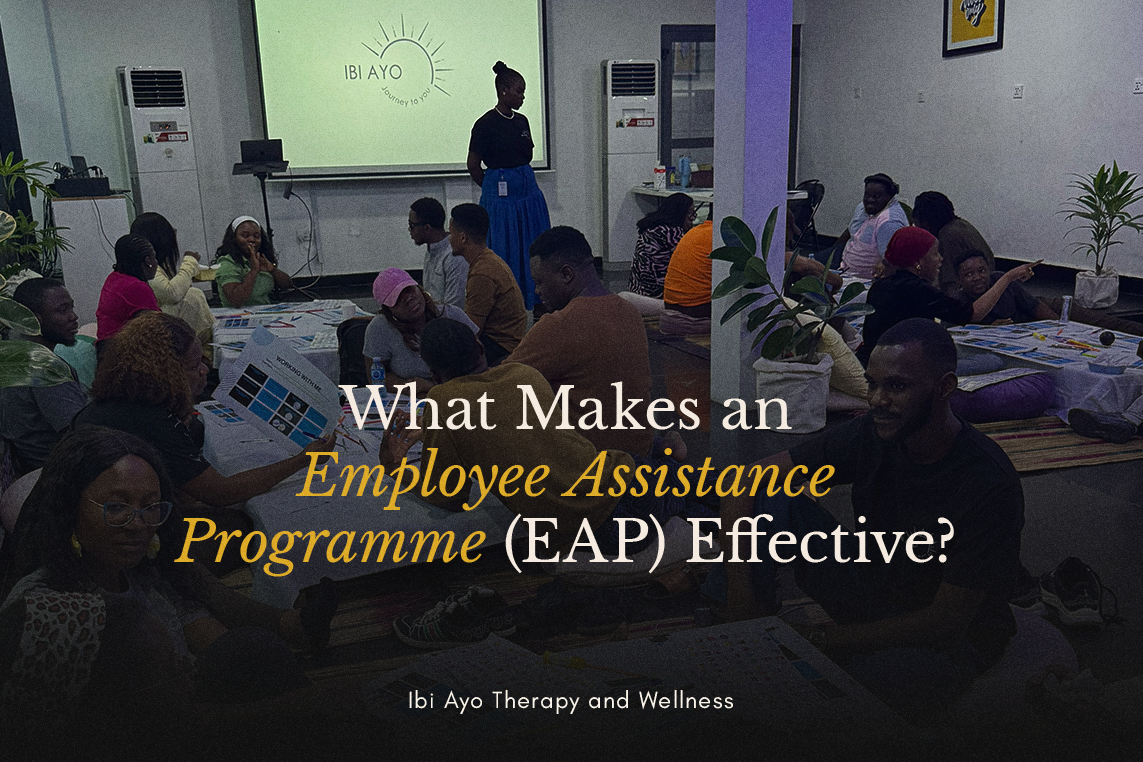
Many organizations have an Employee Assistance Programme (EAP).
It's listed in the employee handbook, mentioned during onboarding, or included as part of the company's benefits package.
But having an Employee Assistance Program isn't the same as having one that people actually use.
The question isn't simply:
"Do we offer an EAP?"
It's:
"Would our employees feel comfortable using it if they needed to?"
Because that's where the real difference lies.
Why many EAPs go unused
When employees don't use an Employee Assistance Programme, it's easy to assume they simply don't need support.
In reality, that's rarely the case.
More often, employees don't access support because they're unsure whether it's truly confidential, they don't know how the programme works, or they worry about how using it might be perceived.
For employers implementing an EAP in Nigeria, these concerns can be particularly important when introducing mental health support into workplace cultures where stigma and misconceptions around therapy may still exist.
Even the most comprehensive plan won't make a difference if employees don't trust it enough to use it.
Before someone reaches out, they're asking themselves something else.
Long before an employee books a counselling session, they're usually asking questions like:
Will my manager know?
Will this affect my career?
Is this really confidential?
Will people see me differently if I ask for help?
These aren't unreasonable concerns.
They're the result of years of workplace cultures where mental health has often been misunderstood or quietly stigmatized.
An Employee Assistance Programme can only be effective when employees believe they can use it safely.
So, what actually makes an EAP effective?
1. Employees trust that it's confidential.
Confidentiality shouldn't be something employees have to guess.
People need to understand exactly what remains private, what information is shared, and the situations where confidentiality may legally need to be broken. The clearer organizations are, the more likely employees are to seek support.
2. Access is simple.
When someone finally decides to ask for help, the process shouldn't become another source of stress.
Booking support should be straightforward, timely, and available in ways that suit different employees, whether that's virtually, or in-person.
3. Leaders talk about wellbeing before a crisis happens.
Employees pay attention to what leaders consistently communicate.
When mental wellbeing is only mentioned after burnout or during awareness months, it can feel performative.
Organizations build trust when leaders regularly acknowledge wellbeing as part of everyday work, not just during difficult moments.
4. Managers know how to respond.
Managers aren't therapists.
But they are often the first people employees turn to when they're struggling.
Equipping managers to recognise signs of distress, respond with empathy, and confidently refer employees to available support can make a significant difference.
5. The programme stays visible.
An Employee Assistance Programme shouldn't disappear after onboarding.
Regular reminders, wellbeing conversations, workshops, and internal communication help employees remember that support exists before they urgently need it.
An Employee Assistance Program is more than an employee benefit.
The most effective organizations understand that employee wellbeing isn't separate from organizational performance.
When people feel supported, they're better able to collaborate, solve problems, adapt to change, and do their best work.
An effective Employee Assistance Programme isn't simply a box to tick. It's part of building a workplace where people know they can ask for support without fear of judgment or professional consequences.
At Ibi Ayo, we partner with organizations to design workplace wellbeing programmes that are built on trust, accessibility, and psychological safety because supporting employees starts long before burnout does.
Our workplace mental health and EAP solutions support organizations in Nigeria looking to make employee wellbeing a meaningful part of their workplace culture.
Get started with us today. Send an email to therapy@ibiayo.com
The Bottom Line
An Employee Assistance Programme is only valuable if employees trust it enough to use it.
Policies matter. Benefits matter. But trust is what turns support into something people actually access.
For organizations considering an Employee Assistance Programme in Nigeria, the goal shouldn't simply be to have an EAP. It should be to create a support system employees know about, trust, and feel comfortable using.